The Third and Ninth House Axis: A Meeting Place for Intimacy.
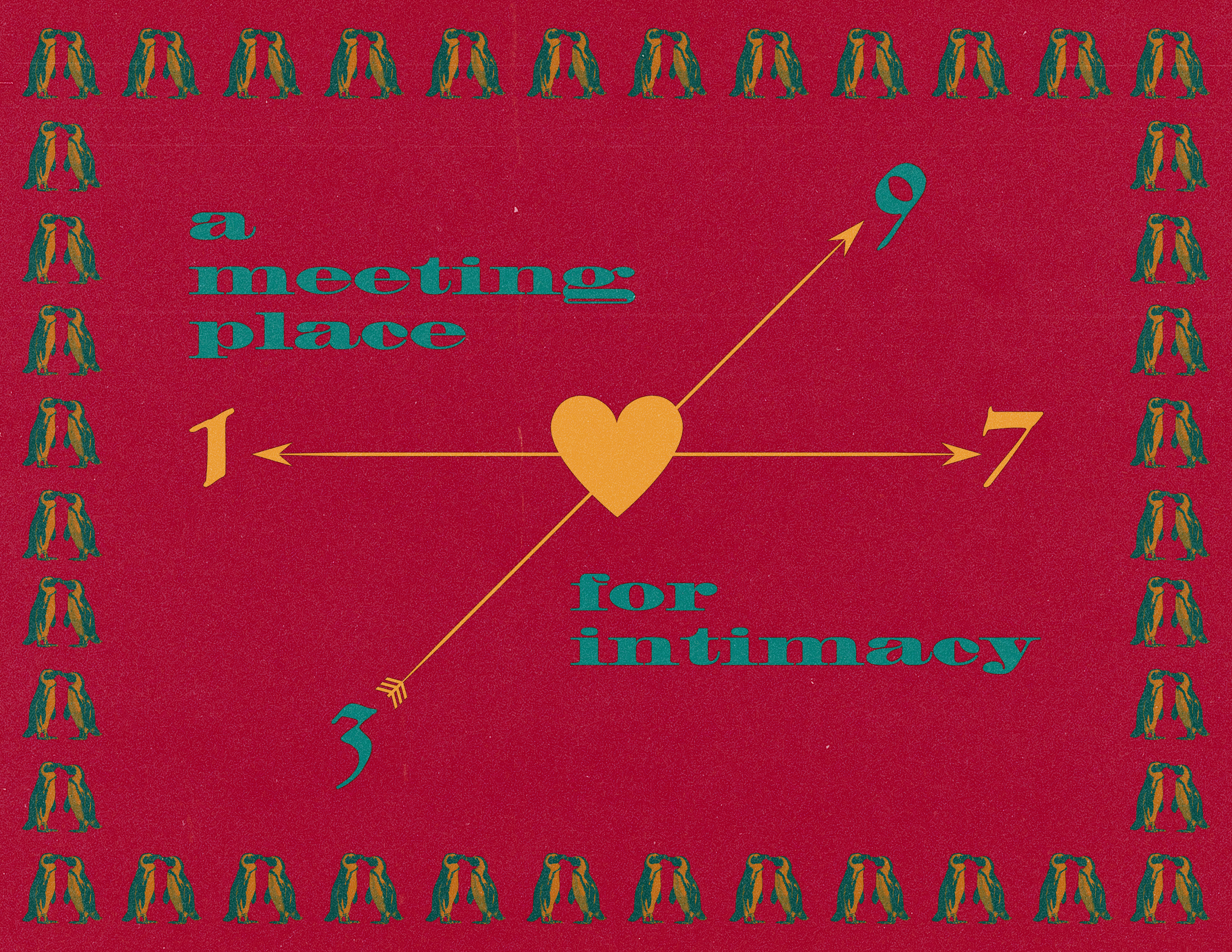
Every interaction we have with the person standing in front us helps formulate some sort of divine truth. We have the ability to impact the way we construct the world around us with every look, word, and touch we offer each other. Our compass of the world, of humanity, formed by our relationships, highly impacts the way we see ourselves and the way we show up in the world. This subtle yet effective power is not meant to be exploited or to become overly cautious about, rather it is meant to encourage us to meet each other with tender intention and thoughtfulness. The superior sextiles and trines the first, third, seventh, and ninth houses form to one another in the natal chart offer a meditation on the way intimate relationships help shape our worldview and self-concept. The third and ninth houses, where we find and embody spiritual meaning, are meeting places for the cultivation of intimacy.The Essence of the First, Third, Seventh, and Ninth Houses
The first house, marked by the ascendant, is the self. The seventh house, marked by the descendant, is the other. The ascendant and descendant are major angles in the natal chart, marking places of high impact in a given life. The seventh house is who’s sitting across from us at the table, who we have one-on-one interactions with, who receives our undivided attention and who we have integrated our lives with. It is union, where a bond is established. Formed by an opposition in the natal chart, the relationship between self and other requires some sort of tension. They are what you are not.

Then, there’s the third house. The third house represents our daily activities, whereabouts, and those we run into along the way. It’s where we refine skills and enact theory. Its opposite, the ninth house, represents abstract concepts that synthesize truth and perspective—philosophy, religion, spirituality, human nature, academia, and culture. These are cadent houses, meaning they take up more energy in a given life. The third and ninth houses both harmoniously aspect, by sextile and trine, the first and seventh houses, posing as safe and supportive places to land between the tension of self and other.

When a planet, sign, or house makes a superior aspect to another, it means it's generally at a higher place of impact in the arrangement than the respective planet, sign or house in question. Superior aspects can occur by sextile, trine, or square. Superior sextiles and trines generally offer support while squares instill domination. When evaluating superior aspects, we can explore how the houses or places play into the equation. For example, Virgo makes superior sextile to Scorpio, meaning Virgo is eleven places from Scorpio, highlighting the benevolence of the eleventh house that represents friends and allies. When Virgo makes a superior trine to Capricorn, it is nine places from Capricorn, highlighting the spiritual insight found in the ninth house and so on.
The Meeting Place
Every day we are reminded that we have more in common than we think. The human condition, our routine quirks and practices, the mundane, the similar rituals we engage in, these are the things that connect us on a soul level. Chatting kindly with a stranger about the weather may seem insignificant, but perhaps your acknowledgement of their place in the world is what they need to feel seen in the moment. I have certainly felt touched by the casual kindness of strangers in many instances. The third house is where consistent connection shines. If we run into or meet up with someone enough times, we are likely to build trust and a closer attraction or affinity to them. This is the superior trine the third house makes to the seventh house.

In any kind of client work or partnership, our praxis, the way we build technical and relational expertise, can deeply impact the person we are sitting with and the way they make sense of their own experiences. The client's experience can also contribute to what we ourselves know to be true. We are also assured through the superior sextile the first house makes to the third house, that we shape our own praxis simply by existing and moving throughout the world as ourselves. From there, the way we embody what we learn has the power to change the people sitting across from us and vice versa.

Relationships of all kinds blossom our quest for meaning and will to live. How many instances are there of a person growing a particular affinity for a foreign culture because it's the tradition from which their lover or neighbor was born into? How much more appealing does traveling or a new experience seem when we have a lover or trusted friend by our side? How many experiences are there of a teacher tending to a student's potential that changes their lives forever?

There’s a reason many look to intimacy to save themselves from suffering. When we really see one another, we know what’s real. We know what to believe and we discover what we’re capable of. Belief is intensely sacred. It requires careful witness and good conversation. Experiences of constant dismissal, neglect, or hurt from others can shape a cowered outlook of the world. Anything diverse is unappealing, new ideas feel lackluster, and connection to both self and other is thoroughly avoided. On the other hand, there are experiences where we are unsure of what to believe until somebody comes along, touches us a certain way, and awakens the dormant wisdom within our hearts. Relationship and conversation with others can also clarify what we don't believe. Ultimately, most of us just want to feel seen by the person in front of us for who we are, the life we’ve lived, and the meaning we’ve crafted along the way. This is the superior sextile the seventh house makes to the ninth house, and the superior trine the ninth house makes to the first house.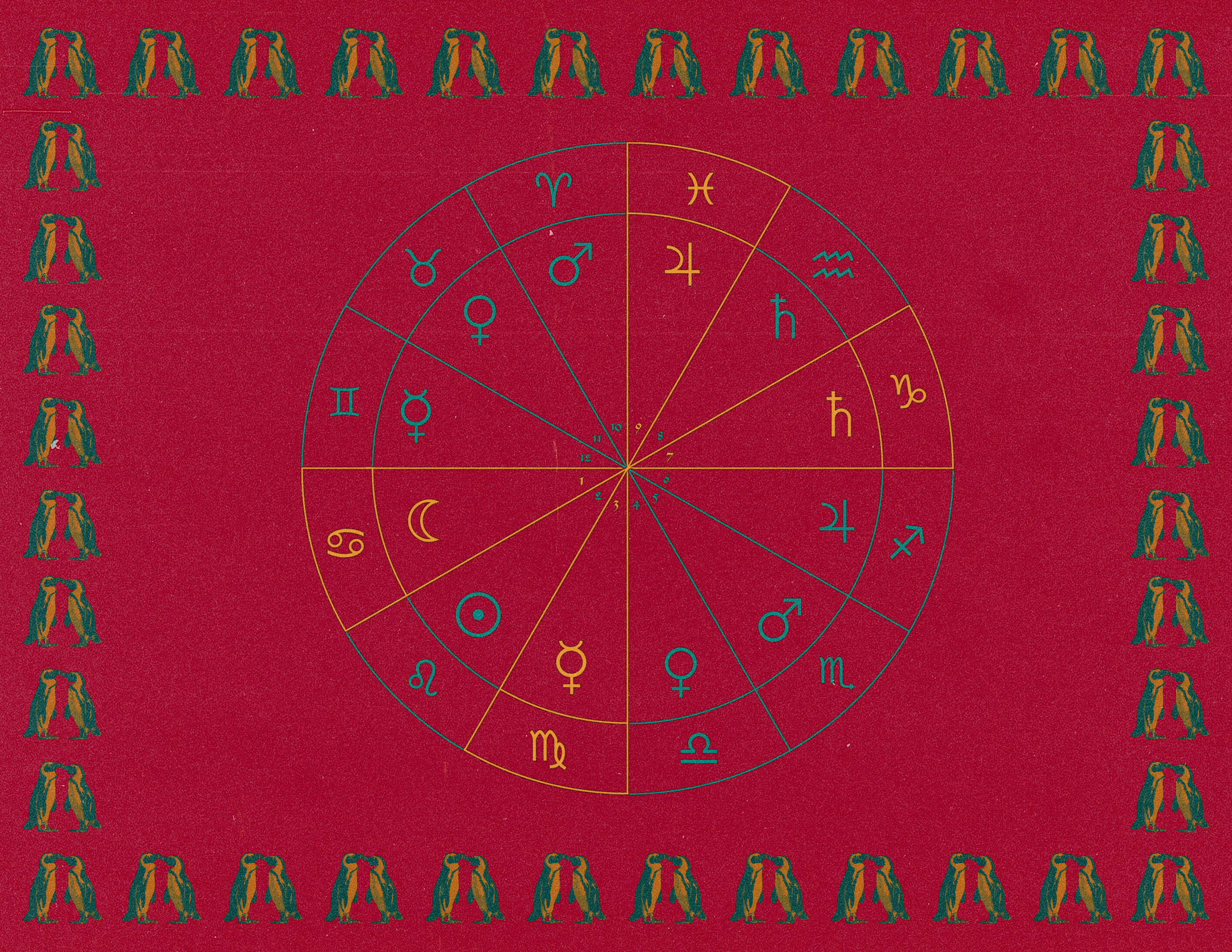
Reverence as Ritual in the Thema Mundi
When you’re with someone in an intimate setting, romantically, platonically or otherwise, you create a culture and ultimately a world together. You craft a series of expressions and expectations, a language, based on each other’s tendencies and experiences. In time, you begin to read each other’s movements, the subtlety in each other's facial expressions, and know what the other person is thinking without them having to say a word. You laugh together without making a sound. You pull at their heart by peering at them from the corner of your eye across the room. You look at them and know that they “just get it.” Everyone can see it too. The adoration you have for each other pours out of your eyes and into one another. Relationship is a ritual, a divine practice you devote yourself to consistently. It’s a process of remembering yourselves and each other. The other person becomes embedded in your instincts and wisdoms as you ignite trust over and over again. Your souls inch closer together to bring forth a world that integrates your most delicate and internal sensations and yet it is something that is entirely outside of you at the same time. This is why pillow talk with a lover or a late night phone call with a friend often feels surreal. This world, this culture, you contribute to, it takes time and commitment, and it opens a window to discovering what’s possible and what’s true. Perhaps this is why the end of a relationship can feel like the end of the world, or the end of a world anyway.

The Thema Mundi is the theoretical birth chart of the creation of the world. It is a Cancer rising chart that contains the seven traditional planets in the signs of their respective domiciles. Through dignity schemes, planetary joys, and the relationships the signs and houses have to one another, astrologers look to this tool to make sense of the human condition.

In the Thema Mundi, Cancer rules the first house, Virgo rules the third house, Capricorn rules the seventh house, and Pisces rules the ninth house. All of these signs are nocturnal, signifying receptivity. Venus, the planet that rules desire and relationships, exalts in the sign of Pisces, which rules the ninth house in the Thema Mundi. Venus exalts here due to the desire to find spiritual meaning in love and art. As Jupiter's domicile sign, Pisces craves integration of wisdom through sensual and visceral experiences. There is only so much one can know on an intellectual level and until that insight is experienced through emotional exchange and participation, it is not completely integrated into what an individual knows to be true. This is also why the Moon, the translator of light, messages, and instincts, rejoices in the third house of practice and divination. In the Thema Mundi chart specifically, Virgo rules the third house, a sign where the process of building technical expertise through tangible experience flourishes. As discussed earlier, the way we enact theory and embody our prowess can impact the way our loved ones make sense of the world.

The same manner in which we formulate meaning is the same manner in which we relate—sensation, desire, depth and ritual. The seventh house, the house that represents our close relationships and contracts, is ruled by Capricorn in the Thema Mundi. Governed by Saturn by domicile and Mars by exaltation, Capricorn is very much concerned with duty. Relationships require a responsibility and devotion to tend to the world you're building together, consistently over time. You operate as a unit with boundaries that nurture what you do and don't desire. There's a strong sense of reverence, equanimity, and symmetry here—you scratch my back and I'll scratch yours, I'll cool down your impulses and you'll cool down mine. You’re a priority for one another. The seventh house makes a superior sextile to the ninth house. Capricorn creates guardrails for safety to thrive, softly enhancing the spiritual depth, long-term vision, and cosmopolitan exploration we find in ninth house Pisces.

Lastly, we find ourselves back to Cancer ruling the first house in the Thema Mundi. This is the sign of Jupiter's exaltation and the Moon's domicile. The cultivation of safety, shelter, and sensitivity is present here. These are the circumstances in which spiritual meaning transmutes into embodiment. From here, embodiment facilitates praxis, and comfort and nourishment nurture the ritual of connection.

Intimacy can be found everywhere if we stay still and look close enough. Relational tension supports and is supported by the vitality of cultivating and embodying wisdom. Good conversation, trust, and curiosity are all we need to feel closer to each other and to the divine.